How Lakefield’s Schedule Supports Deep Learning and Student Wellbeing
With so much to learn and experience at Lakefield College School, we’ve designed a modular schedule—one of the first of its kind in Canadian independent schools—that helps students learn deeply, balance academics, co-curriculars, and wellbeing every day, preparing them to thrive at university and in life beyond The Grove.
Enriched Academics and Authentic Learning Experiences
By reducing the number of courses students take at any one time to three and lengthening each class period, students spend more time with teachers pursuing subjects in greater depth. This model creates more opportunities for enriched academics and learning experiences both inside and outside the classroom.
This modular model is also reflected in our Authentic Learning approach, where students learn by doing through projects, outdoor experiences, and interdisciplinary studies.
Our schedule supports our mission to challenge and enable students to reach their individual potential in mind, body and spirit. Students thrive through challenging academics, leadership opportunities, a wide breadth of co-curricular arts and athletics, and a learning environment adapted to their strengths.
Supports Student Wellbeing
The schedule helps students move, reflect, rest, and rejuvenate. Meaningful breaks between classes reduce transitions and create a calmer rhythm for learning—supporting healthy habits and sustainable growth.
It's our priority at Lakefield to promote balance and mitigate stress levels in teenagers. Research shows that this is the ideal schedule to support student wellness.
Anne-Marie Kee: Head of School and Foundation
Daily Schedule
We confidently offer our students the opportunity for meaningful daily learning with their teachers in small average classes of 14, complemented by daily co-curriculars in the arts and athletics. Students enjoy a full range of community activities throughout the week—from community time, and Chapel to spirit events and evening study.
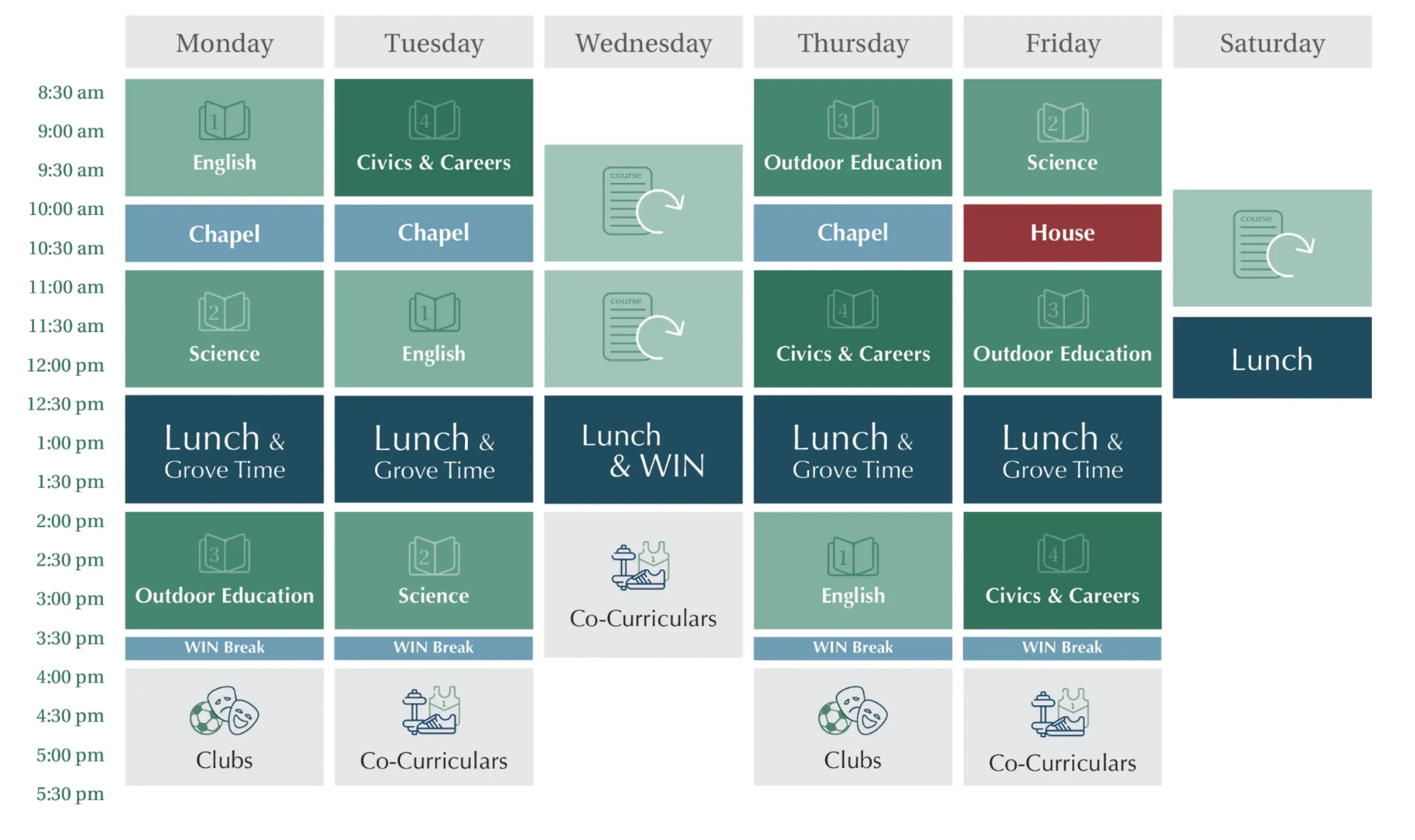
Monday, Tuesday, Thursday, Friday
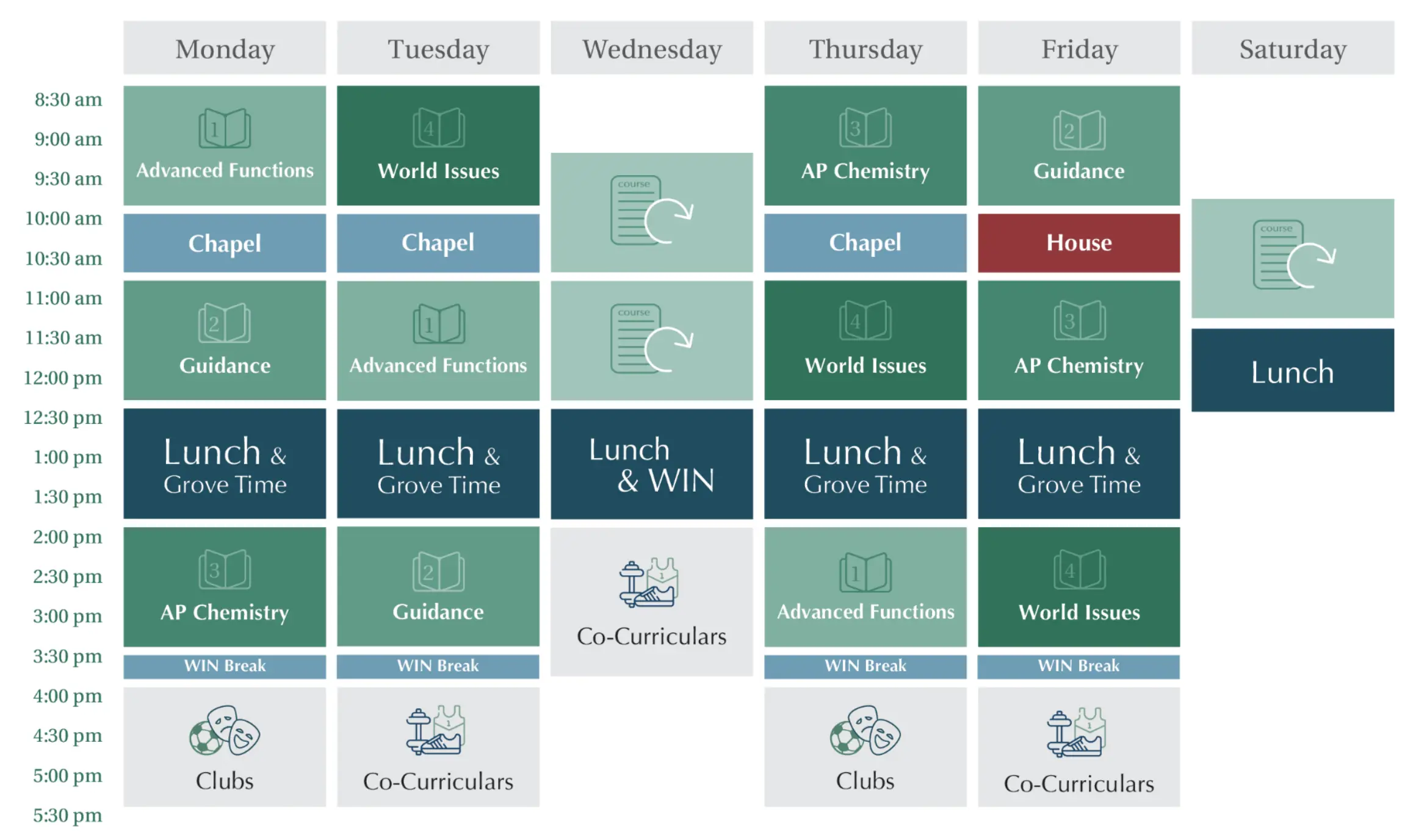
7:00 – 8:20 a.m. — Breakfast 8:30 – 10:05 a.m. — Period 1 10:10 – 10:50 a.m. — Community Time (Mon–Thurs: Chapel; Fri: House Meeting) 10:55 a.m. – 12:30 p.m. — Period 2 12:30 – 2:00 p.m. — Lunch & Grove Time 2:00 – 3:35 p.m. — Period 3 3:35 – 4:00 p.m. — WIN (What I Need) Break 4:00 – 5:30 p.m. — Co-Curricular Programs 5:45 – 7:00 p.m. — Dinner 7:00 – 8:45 p.m. — Study / Evening Class 9:45 p.m. — House Curfew
Wednesday
8:30 – 9:25 a.m. — Breakfast 9:40 – 11:00 a.m. — Period 1 11:10 a.m. – 12:30 p.m. — Period 2 12:30 – 2:00 p.m. — Lunch and WIN Break 2:00 – 3:30 p.m. — Co-Curricular Programs (some may run later) 5:45 – 7:00 p.m. — Dinner 7:00 – 8:45 p.m. — Study 9:45 p.m. — House Curfew
“Lakefield’s modular schedule is designed for today’s learners—balancing academic depth, outdoor engagement, and student wellbeing. By focusing on fewer subjects per Mod and integrating reflection time, students experience less stress, more connection, and greater confidence in their learning.”
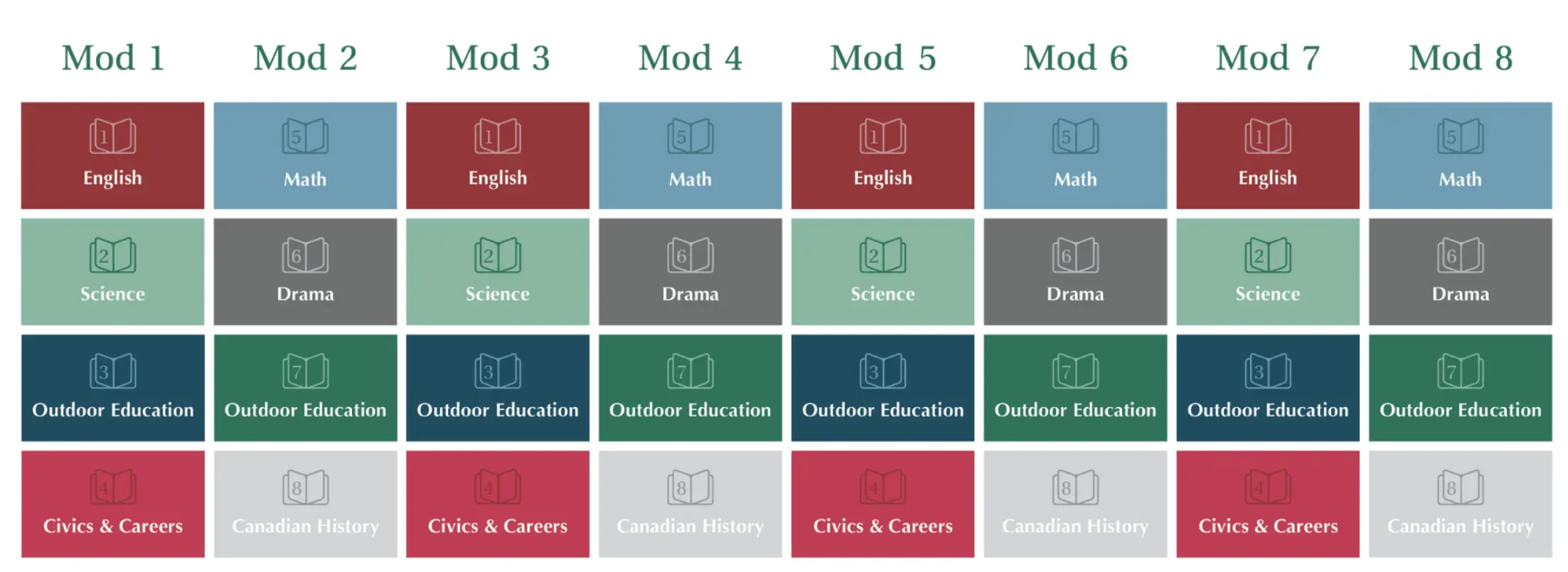
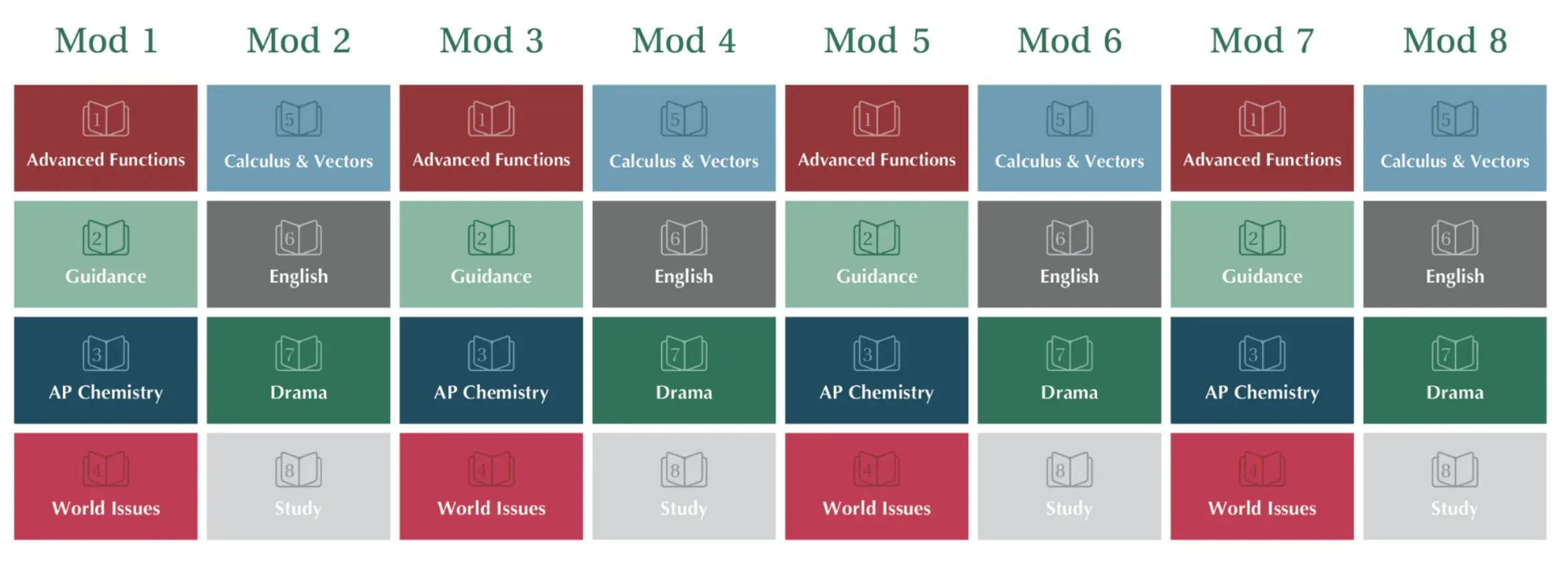
Sample Yearly Course Schedules
Each school year is divided into eight “mods,” each lasting about one month. This allows students to focus deeply on fewer subjects at a time—learning in short, engaging cycles rather than across a full year.
Grade 10
Grade 12
Sample Weekly Course Schedules
These examples show how a typical week might look within a single “mod,” balancing academics, Chapel, House meetings, co-curriculars, and study periods.
Grade 10
Grade 12
Understanding our Modular Schedule
Families often ask how Lakefield’s modular schedule works and why it’s so effective for teenagers. Below, we’ve answered a few common questions to show how this approach supports teenage learners in developing balance, deep focus, and readiness for university life.
What is a modular schedule?
At Lakefield, the school year is divided into eight “Mods,” each lasting about one month. Students take fewer courses at once—usually three—allowing for deeper focus, less stress, and more meaningful learning. Each course returns in several non-consecutive Mods throughout the year, giving students time to revisit and reinforce key concepts while maintaining balance. By the end of the year, every student completes a full complement of academic courses across all eight Mods.
How does the schedule support student wellbeing?
Longer class periods, built-in reflection time, and an extended mid-day Grove Time for lunch, wellbeing, enrichment, and support—along with daily outdoor and co-curricular opportunities—help students stay balanced, energized, and deeply engaged in their learning.
How does this prepare students for university?
Our Vision
“I see the benefits this timetable provides all of our students. My number one takeaway is that students between Grade 9 and 12 can take a breather during the day, dive deep into course content in an authentic and meaningful way, and balance three classes at a time—not eight—which definitely impacts their stress levels and wellbeing.”