
Living within a Piano Culture
Written by Sarah Young, LCS Director of Arts
If you spend any time walking the Lakefield hallways during the school day, chances are you will hear piano music drifting through the building. It is not constant, exactly, but it is frequent enough that its absence is noticeable. Early mornings and late evenings may be quiet, but throughout the day, piano music echoes from practice rooms, the music rooms, and Chapel becoming part of the school’s soundscape.
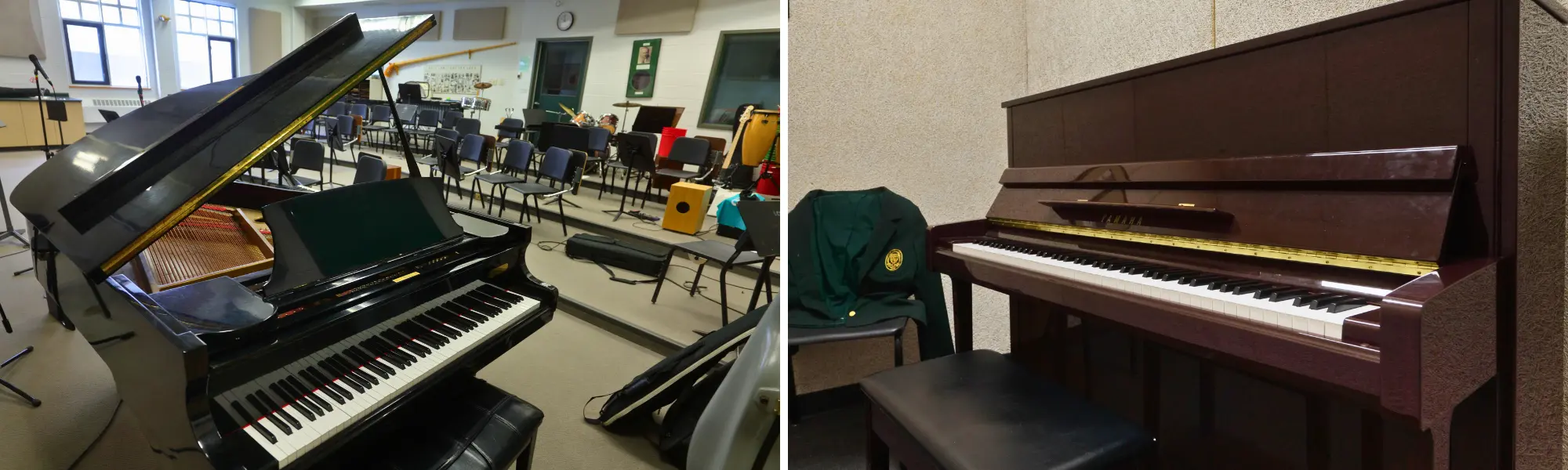
Across campus, we have at least eleven pianos, nine in our academic buildings and at least two more in residence spaces. Three are grand pianos; the rest are uprights. Some are new, others nearly a century old. Several are Yamahas, a few were built by Mason & Risch, Samick, Heintzman, or Steinway & Sons. Together, they form an eclectic collection, united by one thing: they are played.
Students use these instruments in every imaginable way. Some enter practice rooms to learn piano from scratch. Others refine advanced repertoire. Some write their own music, while others teach friends a new tune or learn how to accompany another instrument. Beginner scales mix with moments of extraordinary skill. What emerges is not a polished performance culture, but a living, breathing practice of music-making.
For some students, the piano is a quiet, personal space. The pianos offer a chance to slow down and spend some time focusing on music. For others, it becomes a shared experience. Some work with one of our two private piano teachers who visit the school four days a week, and some combine individual work by playing with friends or in music ensembles. However students choose to engage, our pianos offer meaningful opportunities for musical growth and creative expression.
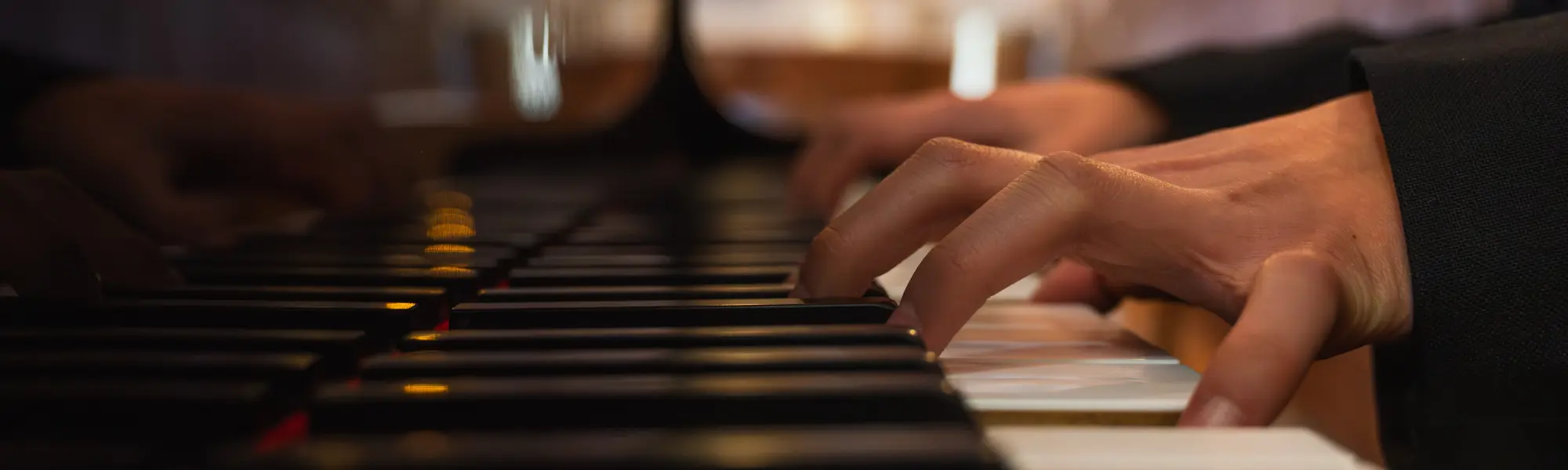
For Charlotte ’29, who has played piano since the age of five, that space is an essential part of daily life at LCS. She can often be found in a practice room up to three times a day, for sessions ranging from 15 minutes to an hour. She’ll tell you, “If my mind is clouded, just spending that time in the room improving my skill, having fun, and entertaining myself with songs is what helps get me through the day. It really helps me flourish as a student here.”
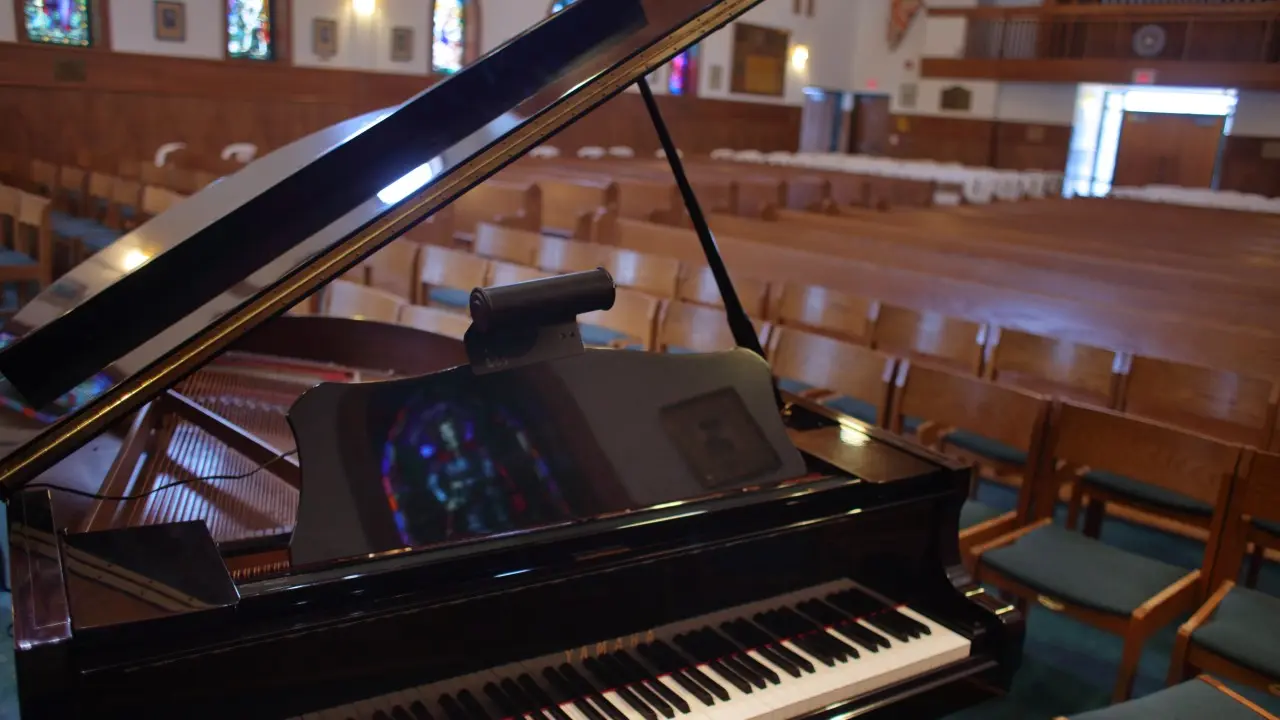
Deniz ’29 has been playing the piano for six years and devotes about 45 minutes each day to practising warm-ups, repertoire, and technical exercises. “What I like about piano and music in general is being able to play my favourite songs, perform, create, and be inspired by other musicians,” she says. Deniz enjoys playing on the many pianos at LCS, with her favourite being the Yamaha grand in the chapel.
Daniel ’26 has been playing piano for nearly 13 years, and piano is an important part of his life at LCS. He continues to develop his skills through individual practice and also serves as the resident pianist for Rock Choir. “I really enjoy having access to individual practice rooms,” Daniel shares. “It’s easy to practise whenever I have time, whether on my own or with friends. Seeing other students practising piano makes me happy because it reminds me that there are others who love piano too.”
This culture was not inevitable. Coming out of the pandemic, two of our practice rooms housed electric keyboards rather than acoustic pianos. At the time, it was unclear whether students would even use the spaces. Many students had gone a couple of years without regular access to instruments. Still, with vision and persistence, our Director of Arts, Sarah Young sought out lovely, acoustic pianos. This was no easy task in the post-pandemic market. She found two Yamahas. They weren’t the black finish she had hoped for, but they were beautiful, and we took what felt like a risk: investing in instruments without certainty they would be used.
But, quickly they were. Those rooms filled with sound, with students, and with curiosity. What began as an aesthetic choice became an invitation, and students soon accepted it.
Today, piano playing thrives without being mandated or formalized. There is no piano course, no directive pushing students toward the instrument. We simply offer beautiful, accessible piano spaces, and students respond. Amid full schedules and busy days, they choose to practice, to play, to learn.
The result is a quiet kind of abundance: music echoing through the halls, a reminder that when opportunity is offered, oftentimes creativity will be the result.