
Human and Artificial Intelligence at Lakefield College School
As artificial intelligence transforms how we learn, work, and live, the human capacities we develop through education matter more than ever.

The Human Purpose of Education
At Lakefield College School, education is, at its heart, a human endeavour. Grounded in our Mission, Vision, and Values, we are committed to the development of the whole person – mind, body, and spirit. Our purpose extends beyond the acquisition of knowledge, the delivery of content, or the attainment of credentials. We strive to develop thoughtful and compassionate people who can exercise sound judgment and integrity while contributing meaningfully to the world.
The emergence of generative artificial intelligence invites us to reconsider what matters most in education. As machines become increasingly capable of producing information, solving problems, and completing tasks, the human capacities that education develops become even more important: curiosity, critical judgment, creativity, resilience, empathy, morality, and the ability to think independently.
Generative AI makes this commitment more urgent. Students can now produce sophisticated work without necessarily developing the knowledge or understanding that the work is intended to build. At the same time, these tools offer remarkable opportunities for students who have developed the knowledge and confidence to use them well. Our responsibility is to protect the intellectual work through which students learn while preparing them to use technology to extend their thinking, creativity, and to develop the judgment, adaptability, and sense of responsibility they will need in their future careers, relationships, and contributions to society.
At Lakefield, we have committed ourselves to the growth and development of our students as moral beings capable of critical thinking in a time when both are increasingly called into question. We recognise our responsibility to provide leadership to our nation’s leading schools and clear guidance to our students in our own classrooms. Our Two-Lane Approach reflects our belief that students must first develop the intellectual foundations of independent thought: the ability to read deeply and evaluate knowledge, think critically, and express ideas with clarity and conviction. They must experience the essential friction of learning before using AI to extend their thinking and creativity. Our goal is to help students develop the knowledge, judgment, and independence to use it well. We see AI as presenting an issue of design rather than one of technology.
Our conversations through the Grove Agora: Human and Artificial Intelligence have reinforced a central principle: technology must serve human development, not define it. We seek to understand technology’s possibilities and limitations and to use it purposefully and ethically.
As a boarding school, LCS has a particular responsibility and opportunity. We bring people together to learn, live, question, create, and grow in community with one another and the natural world. Our approach to AI must strengthen these experiences.
Four commitments will guide our thinking.
1. Human Development and Authentic Learning
We will use technology to deepen learning, while protecting the intellectual struggle through which learning takes place.
Genuine learning requires more than access to information or the ability to produce a correct answer. It requires students to build knowledge, wrestle with difficult ideas, make mistakes, revise their thinking, and develop the confidence to exercise independent judgment.
AI can expand what students explore and create. It can offer feedback, provide us with answers, and help learners approach problems in new ways. But when students use AI to bypass the very thinking they need to develop, the appearance of achievement can replace genuine understanding.
Our commitment is to augmentation over automation. We will distinguish between using technology to extend established capabilities and using it to avoid the work of learning.
The Two-Lane Approach provides a framework for making these decisions.
In Lane 1, students develop and demonstrate their abilities independently, without AI. This might include an in-class essay, a supervised problem-solving exercise, or an explanation of how they arrived at an answer. These experiences allow students to build foundational skills and give teachers a clear understanding of what each student knows and can do.
In Lane 2, students use AI deliberately to extend their thinking, creativity, and capacity to solve problems. The ideas, judgments, and decisions must remain their own. Students must be able to explain how they arrived at their work and critically evaluate the contributions made by AI.
Students can only evaluate AI effectively when they possess enough knowledge of the subjects they are studying. A student who understands a scientific concept can recognise when an AI-generated explanation is inaccurate, even when it sounds convincing. A student who has developed as a writer can judge whether an AI-generated suggestion strengthens an argument or intrudes on their own voice. Foundational knowledge, literacy, numeracy, and critical reasoning remain essential to developing the judgment to think critically about the information AI provides.
We also want students to develop confidence in their own ideas and voices, understanding what they want to communicate and why. AI should extend their capacity to express and realise those ideas, not replace the independent thinking and personal ownership that give them meaning.
The decision to use AI must begin with the purpose of the learning experience. What do we want students to know, understand, and be able to do? Where can AI meaningfully support those learning goals? These questions should guide the design of learning and assessment, rather than allow the availability of technology to determine how students learn.
This commitment means we will:
- Prioritise understanding, intellectual independence, creativity, and the development of sound judgment.
- Design learning experiences around clear educational outcomes, identifying when independent thinking is essential and when AI can meaningfully extend student learning, creativity, and problem-solving.
- Help students understand how they learn, reflect on their thinking, and develop the confidence and agency to make informed decisions about when and how to use AI.
- Evolve assessment to make student process, thinking and understanding visible through discussion, drafts, portfolios, practical work, supervised assessments, and the defence of ideas. A polished final product alone cannot demonstrate learning. Students must be able to explain and demonstrate the knowledge and thinking behind their work.
- Teach students to evaluate AI outputs critically, including their accuracy, assumptions, biases, and limitations.
- Ensure that academic integrity is grounded in trust, transparency, shared responsibility, and authentic evidence of learning, with students and teachers understanding the educational purpose behind expectations for AI use.

2. Human Connection and Community
We will protect the relationships, shared experiences, and engagement with the natural world that make a boarding education at Lakefield College School distinctive.
Education is a human practice shaped by relationships, conversation, collaboration, physical experience, and a sense of belonging. Teachers and peers challenge us and help us see beyond our own perspectives.
At a time when digital experiences can occupy an increasing share of our attention, LCS must intentionally preserve the value of being together. Harkness discussions, collaborative investigations, advisory conversations, House life, athletics, the arts, and shared experiences beyond the classroom are essential to the education we provide. These experiences develop capacities that are difficult to generate through digital interactions. Around a Harkness table, students listen carefully and respond thoughtfully to ideas they may not have anticipated. In shared activities, they make decisions, work through challenges, and recognise their responsibilities to others. These moments of human interaction and direct experience are essential to developing sound judgment and confidence.
The value of a boarding school education lies not only in the opportunities available to students, but in the daily experience of learning to live alongside others. In our Houses, classrooms, shared meals, activities, and conversations, teenagers practise empathy, navigate differences, develop independence, and take responsibility for themselves and their community. These experiences cannot be automated or reduced to the efficient exchange of information. They are fundamental to becoming capable, compassionate adults.
Our campuses, farm, and Lake Katchewanooka extend these opportunities beyond the classroom. Through outdoor exploration, experiential learning, and shared challenges, students develop attention, resilience, curiosity, and responsibility through direct interaction with the natural world. These experiences are integral to rigorous learning and our understanding of human development and intelligence.
This commitment means we will:
- Protect opportunities for face-to-face dialogue, collaborative learning, mentorship, and meaningful boarding life.
- Ensure students have regular opportunities for outdoor exploration, physical challenge, creative expression, and direct experience beyond screens.
- Use our campus and surrounding environment as settings for authentic inquiry, interdisciplinary learning, and environmental stewardship.
- Encourage students to examine the social, ethical, and environmental consequences of AI and other technologies
- Use technology in ways that strengthen human relationships and our connection to the natural world.
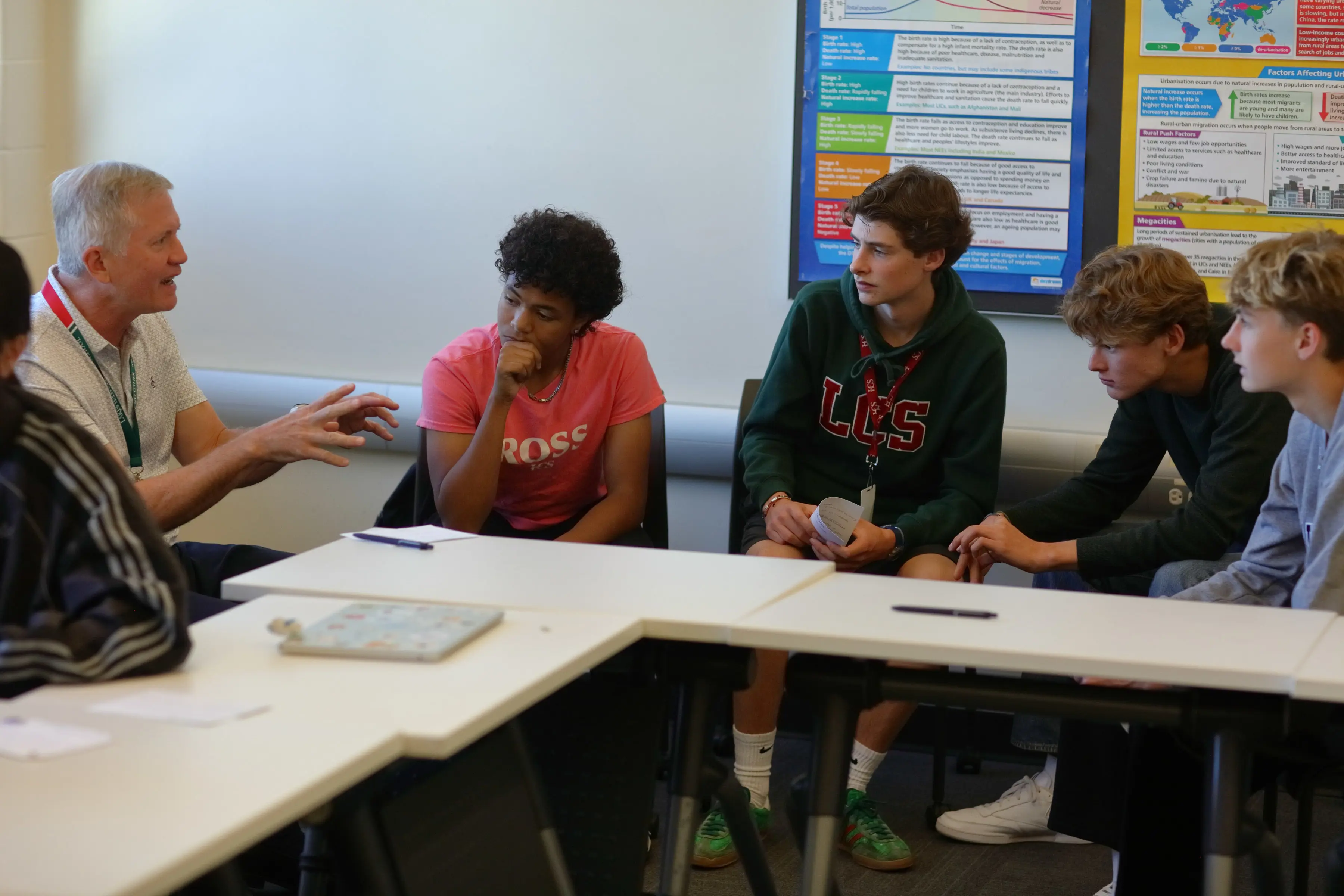
Photo: Grove Agora: Human and Artificial Intelligence October 2026
3. A Learning Community Prepared to Adapt
We will build the knowledge, shared responsibility, and institutional capacity to respond thoughtfully as AI and other technology evolves.
No single policy or set of tools will provide a permanent answer to the questions AI raises. Our response must be grounded in educational purpose while remaining open to new evidence, changing capabilities, experience within our community, and centred on student learning.
LCS faculty and staff are central to this work. Our responsibility as a school is to ensure that professional learning, curriculum development, responsible technology adoption, and ongoing evaluation are connected through a coordinated institutional approach. Students, families, staff, and school leadership also have a role in shaping a thoughtful and responsible institutional approach.
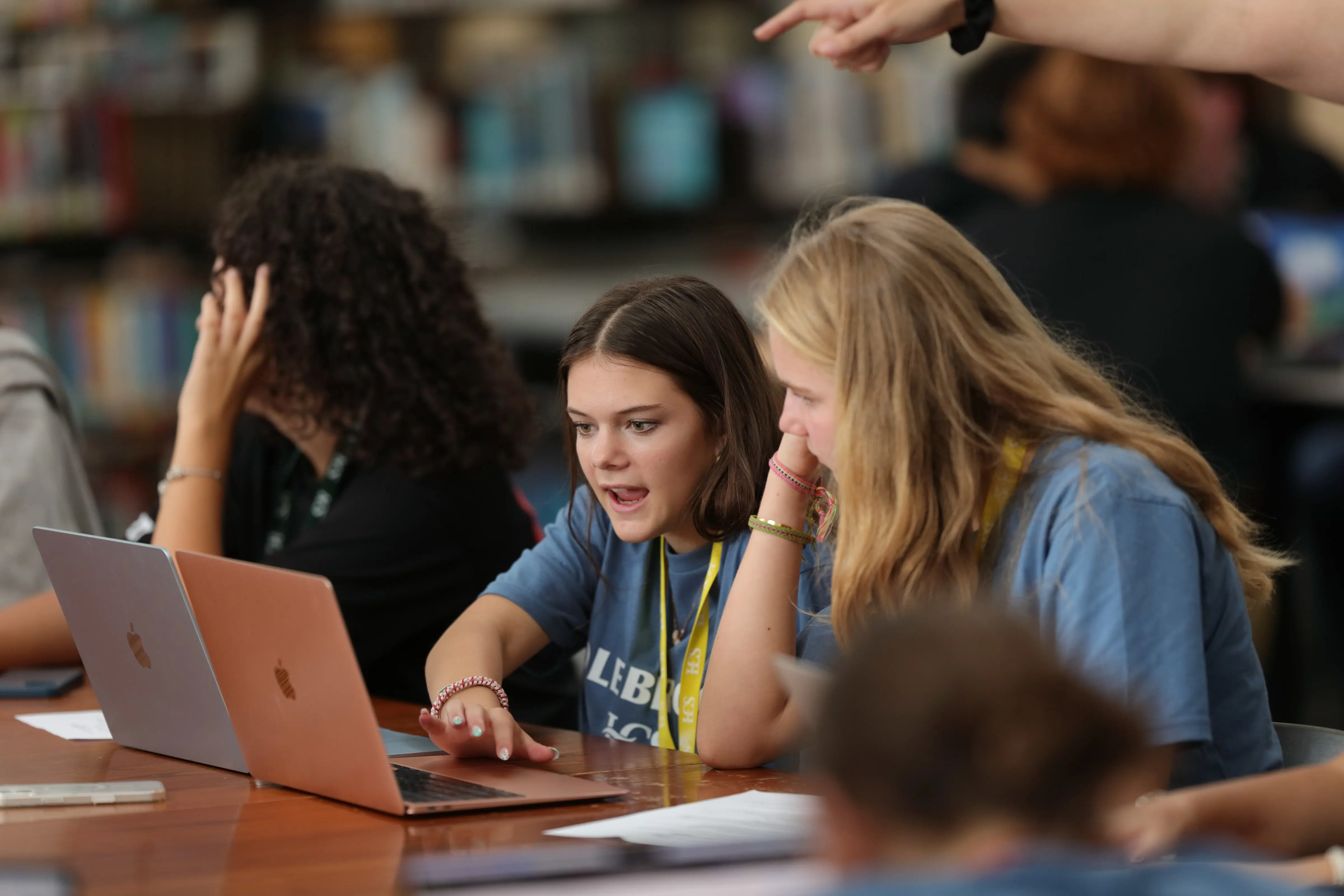
Student perspectives are particularly important because these are the ones who experience the effects of AI on their learning firsthand. At LCS, we have engaged students in conversations about their experiences and continue to seek their perspectives as our approach develops. Through initiatives such as the AI Innovation Club, students explore the possibilities of AI by identifying challenges in their community and developing tools to address real needs. We are also leading a Student AI Network connecting students from independent schools across Canada, providing opportunities for young people to share perspectives and contribute recommendations about the future of AI in education.
Our commitment to learning extends beyond our own classrooms. Through our annual Summer AI Institute, held for three consecutive years and bringing together approximately 100 educators annually, our inaugural Grove Agora: Human and Artificial Intelligence, which engaged more than 600 participants, and collaboration with educators and institutions in conferences across North America, LCS is contributing to a wider conversation about the future of teaching and learning. These opportunities challenge our assumptions, deepen our understanding, and allow us to share what we are learning with others.
Our goal is not simply to develop technical fluency. It is to help build an understanding of what AI can do, where it may fall short, and how we all need to be responsible in its use.
This commitment means we will:
- Continue to develop a coordinated, school-wide approach to AI and education, with clear leadership, accountability, and processes for ongoing review and adaptation.
- Support faculty and staff through dedicated professional learning, collaborative experimentation, and opportunities to evaluate and share effective practices, modelling the curiosity, adaptability, and commitment to lifelong learning we seek to develop in our students.
- Establish clear, developmentally appropriate expectations for AI use, recognizing that different subjects, learning goals, and student experiences may require different approaches.
- Ensure every student develops foundational AI literacy and meaningful opportunities to apply AI critically, creatively, ethically, and responsibly across disciplines, while continuing to have opportunities to build deep subject knowledge and apply independent thinking to real-world problem-solving.
- Establish and regularly review appropriate oversight for emerging technologies, including privacy, security, equity, access, academic integrity, and responsible procurement, while ensuring students have access to approved tools that protect their personal information.
4. Outdoor, Authentic, and Place-Based Learning
We will deepen our commitment to immersive experiences in the outdoors that build leadership, adaptability, resilience, self-reliance, and a lifelong connection to the natural world.
At a time when digital environments increasingly capture human attention, LCS is working to ground learning in physical reality. We believe that resilience, leadership, and confidence are developed through direct engagement with the land, real-world problem-solving, and shared adventure. Our approach is an intentional, four-year scaffolded Outdoor Education journey designed to ensure our students develop the skills and judgment to explore the natural world independently, approach its challenges with respect, and find a lasting sense of connection to nature.
Direct experience develops knowledge and judgment that cannot be acquired through information alone. Students learn to assess conditions, respond to uncertainty, make decisions, and take responsibility for the consequences of their actions. In a world where AI can generate answers and offer seemingly effortless solutions, nature-based experiences become even more valuable, developing the confidence, discernment, and independence students need to think critically and navigate an increasingly complex world.
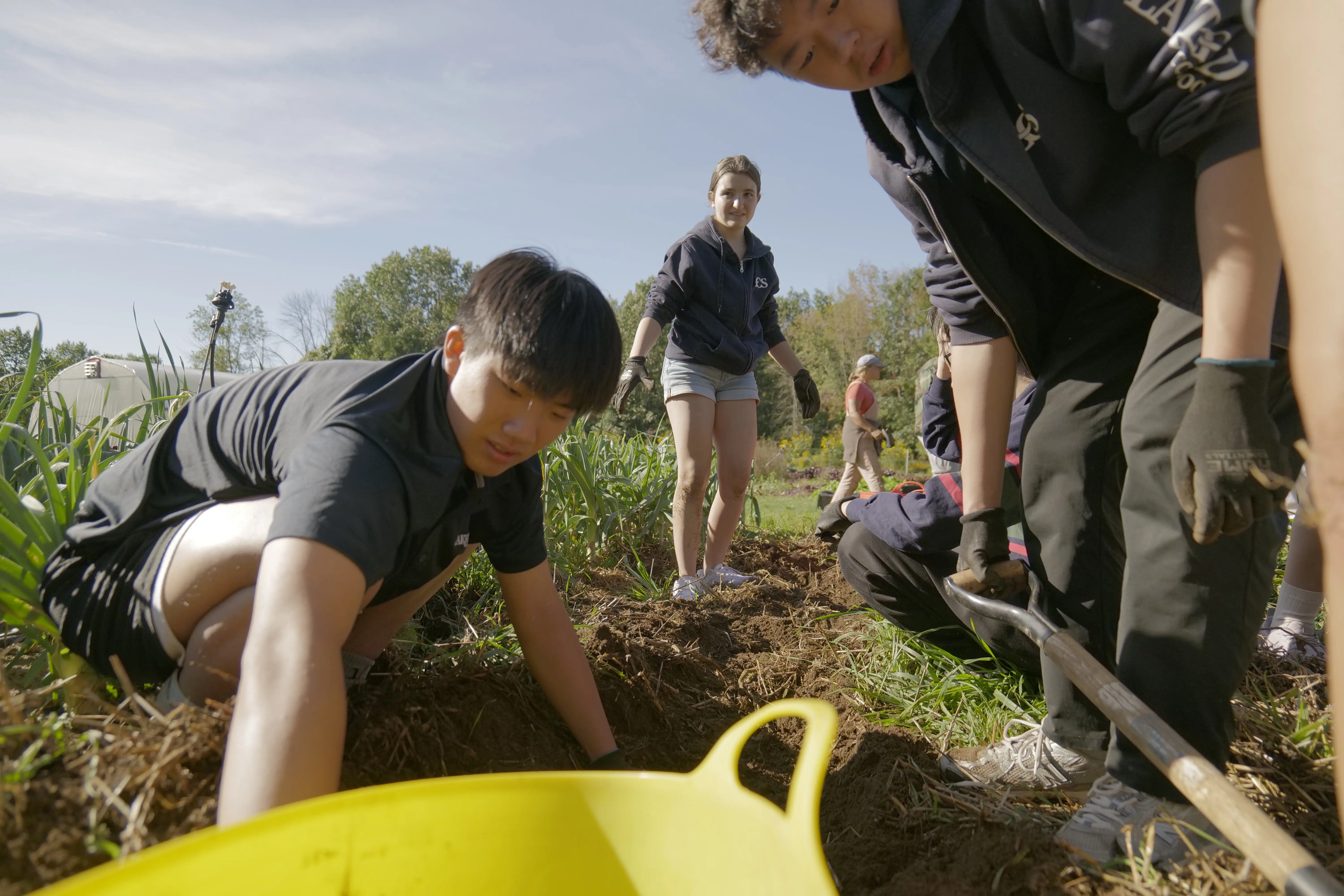
Our two learning environments, our main campus on Lake Katchewanooka and our Northcote campus with a regenerative learning farm, serve as active, living laboratories. Inside our curriculum, courses like Green Industries span across three levels, allowing students to explore regenerative agriculture, sustainable food systems, and food sovereignty while planting, harvesting, and preparing food on site. Beyond the classroom, our faculty and staff possess expert qualifications, enabling us to facilitate whole-grade adventure trips simultaneously without outsourcing, extending the relationships between students and educators into settings where trust, shared responsibility, leadership, and personal growth take on new meaning.
This commitment means we will:
- Sustain a 4-year scaffolded Outdoor Education curriculum that guides students progressively from foundational skills and first aid to advanced trip facilitation and student-led leadership.
- Integrate the natural environments provided at Northcote and our main campus directly into academic coursework, leveraging our regenerative farm, forests, and waterfronts for authentic hands-on learning and place-based inquiry.
- Preserve tech-free spaces and rituals in House life and outdoor pursuits, ensuring students regularly experience the focus, peace, and balance that comes from simple engagement with nature.
- Expand outdoor and adventure experiences, relying on our own fully-qualified faculty to lead safe, meaningful Global Learning trips and wilderness expeditions.
Our Commitment to the Future
LCS approaches the development of artificial intelligence with both humility and confidence. We recognise that its future implications remain uncertain and that our understanding must continue to evolve. At the same time, we can be clear about the educational principles that guide our response.
Our responsibility is to prepare students with the knowledge, independence, and judgment to thrive in a world shaped by rapidly evolving technologies. This means developing their ability to think independently, act ethically, and engage meaningfully with others; essential capacities for navigating a future we cannot yet fully imagine. It demands ongoing reflection, a willingness to challenge established practices, and the courage to rethink how education can best serve the next generation.
Our distinctive strength lies in the place we inhabit and the community we create: an environment where intellectual challenge is balanced by human connection, where technology is considered in light of its consequences, and where the natural world remains an essential part of learning and a balanced life.
We believe schools have an important role to play in shaping the future of education in an AI-enabled world. We are committed to contributing to that work through thoughtful exploration, collaboration, and sharing what we learn with the wider educational community.
At Lakefield College School, artificial intelligence will serve human development, authentic learning, and a deeper relationship with one another and the natural world.
Read more about LCS and Artificial Intelligence
Lakefield College School AI Institute
Grove Agora: Human and Artificial Intelligence
AI Conversations: A Two-Lane Approach to Assessment
AI Conversations: The Thinkers Who Shape Our Vision at LCS
AI in Action: How Lakefield Students are Solving Real Problems